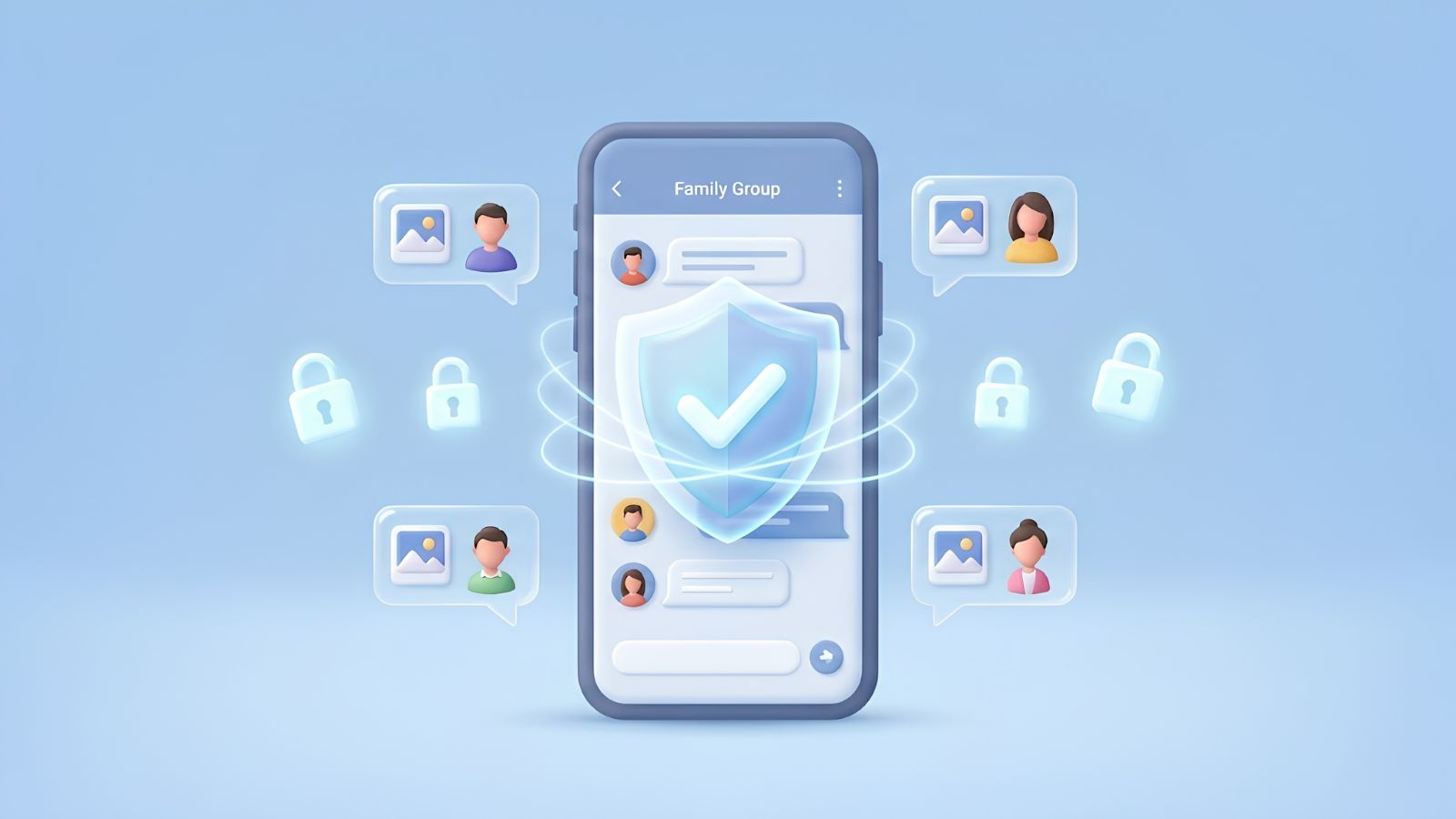
Staying close as a family gets harder when everyone lives in different cities, time zones, or even countries. The group chat becomes the family living room. It's where photos are shared, milestones are celebrated, plans are made, and sometimes difficult conversations happen.
That's also why privacy matters more than many people realize.
A generic social network packed with ads isn't always the best place for personal family moments. Neither is a workplace messaging tool designed for project management rather than relationships. When grandparents, parents, siblings, and cousins are sharing photos, voice notes, and everyday life updates, most families want a space that feels both simple and secure.
To identify the strongest options, we evaluated dozens of mobile apps against four key standards: genuine end-to-end encryption, transparent privacy practices, ease of use for family members of all ages, and dependable performance on both iPhone and Android devices. We excluded enterprise software, web-app-only platforms, and services that aren't broadly accessible to North American users.
These are the apps that stood out.
If privacy sits at the top of your priority list, Signal is the benchmark everyone else gets measured against.
Unlike many messaging platforms, Signal isn't funded by advertising and doesn't build business models around user data. The service is operated by an independent nonprofit organization, which removes much of the pressure to collect information for commercial purposes. Every message, photo, voice note, and video call is protected using the open-source Signal Protocol, and group administrators retain strong control over who can join family conversations.
The experience itself feels refreshingly straightforward. No algorithm deciding what you should see. No social feed competing for attention. Just a secure place for family communication.
Signal also supports encrypted group video calls for up to 50 participants, making it a practical option for everything from weekly family check-ins to virtual holiday gatherings.
100% Free
There are no ads, subscription tiers, or feature paywalls. The platform is funded primarily through donations. Users who need large encrypted media backups can purchase optional cloud storage for $1.99 per month, but standard messaging and local backups remain free.
Pros:
Industry-leading privacy protections with minimal data collection.
Excellent encrypted voice and video call quality.
Fully open-source, allowing independent security audits.
Cons:
Requires a phone number during registration.
Lacks some of the photo-sharing and memory-book features families may enjoy elsewhere.
For many families, WhatsApp wins before the conversation even starts because everyone already has it installed.
That's a significant advantage. Convincing relatives to adopt a new platform can be surprisingly difficult, especially when multiple generations are involved. WhatsApp removes that hurdle while still providing strong security. Messages, photos, videos, and calls are protected by end-to-end encryption built on the same underlying protocol that helped make Signal famous.
For international families, its popularity becomes even more valuable. Whether relatives live across town or across an ocean, there's a good chance they're already using it daily.
The Status feature adds another layer of connection by allowing family members to post temporary photo and video updates that disappear after 24 hours—a simple way to share everyday moments without cluttering the main chat.
No subscription fees. No charges for standard messaging or calling features.
Pros:
Nearly universal adoption makes onboarding effortless.
Strong desktop and tablet support.
Performs reliably even on slower mobile networks.
Cons:
Parent company Meta collects operational metadata and usage information.
Requires a phone number to create an account.
Threema appeals to a very specific kind of user: people who want privacy without attaching their identity to the platform.
Instead of requiring a phone number or email address, the app generates a unique Threema ID during setup. That small difference dramatically reduces the amount of personal information tied to an account and eliminates many of the contact-sync concerns found in mainstream messaging apps.
All conversations, file transfers, and voice calls are end-to-end encrypted. The app also includes practical tools like built-in polls, which come in handy when coordinating family reunions, holiday schedules, or deciding where everyone wants to meet next summer.
It isn't flashy, and that's largely the point. Threema focuses on security first and social features second.

One-Time Purchase
Approximately $6.99 through the App Store or Google Play, with no recurring subscription fees.
Pros:
Exceptional anonymity and minimal personal data collection.
Protected by Switzerland's strong privacy framework.
No advertising and no ongoing subscription costs.
Cons:
Every family member must purchase the app.
The interface feels more functional than polished.
Some families need more than a chat window.
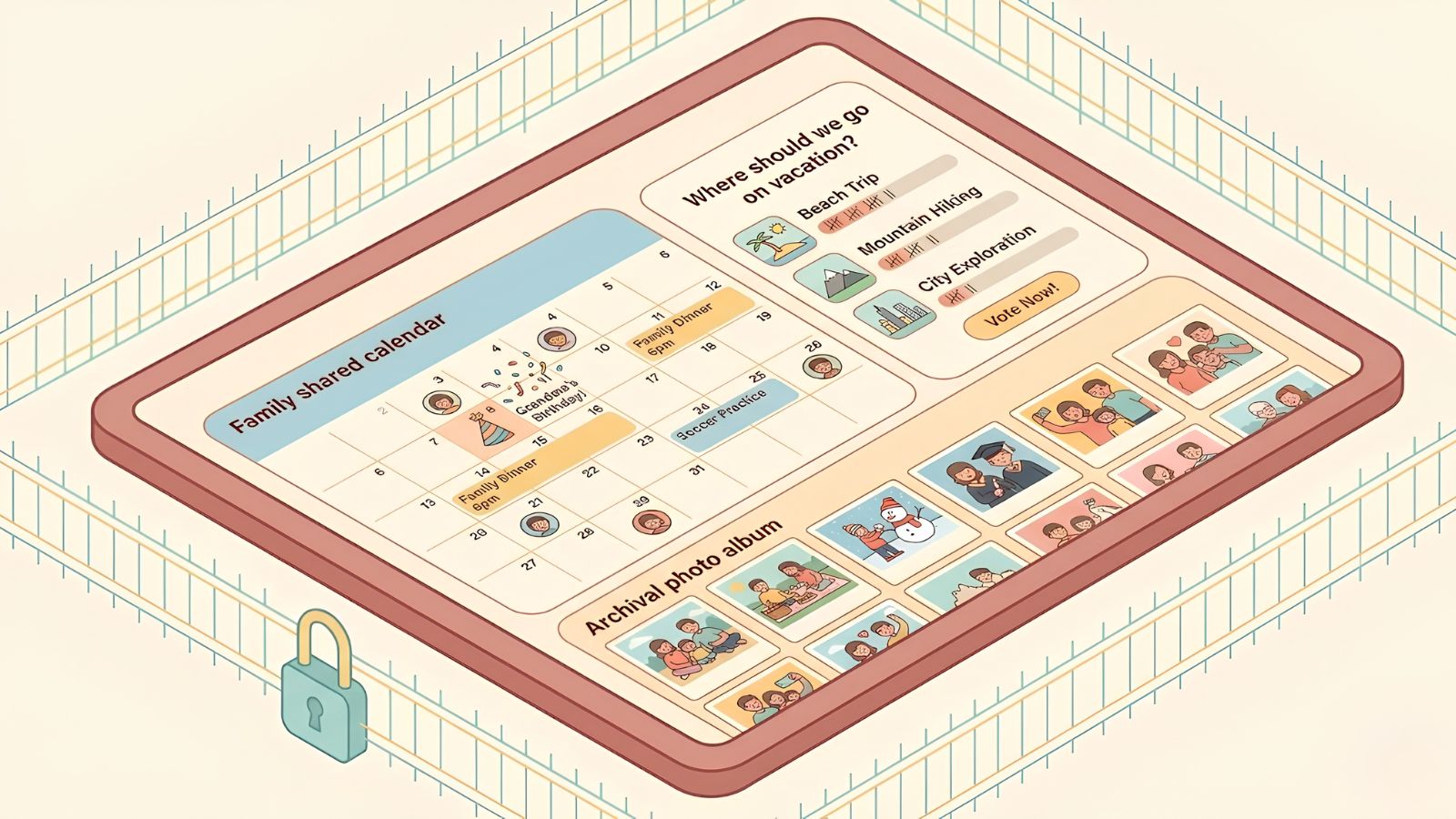
BAND is best thought of as a private family headquarters rather than a traditional messaging app. Alongside conversations, it offers shared calendars, photo albums, event planning tools, polls, and to-do lists. For large families juggling birthdays, reunions, vacations, and school events, that extra structure can be incredibly useful.
The tradeoff is privacy.
Unlike Signal or Threema, BAND does not provide end-to-end encryption for individual conversations. Instead, it relies on private, invitation-only groups to keep information restricted to approved members. For organizing family activities and preserving photo collections, that's often sufficient. For highly sensitive conversations, some families may prefer a more security-focused platform.
Free
Supported through in-app advertising, with optional purchases for stickers and cosmetic enhancements.
Pros:
Outstanding organizational features.
Shared calendars, polls, albums, and task management tools all live in one place.
Flexible notification controls help prevent group-chat overload.
Cons:
No end-to-end encryption.
Includes advertising.
Collects user data for analytics and advertising purposes.
If your family's top priority is keeping conversations private while making communication effortless, Signal remains the strongest overall choice.
BAND offers excellent organizational tools, but it isn't built around cryptographic privacy. WhatsApp delivers tremendous convenience, though some families remain uncomfortable with Meta's broader data ecosystem. Threema arguably provides the highest level of anonymity, yet the upfront purchase requirement can make adoption difficult across larger family groups.
Signal lands in the sweet spot.
It's free, easy to use, available on both major mobile platforms, and backed by a nonprofit organization whose interests align far more closely with user privacy than advertising revenue. For families sharing personal conversations, photos, milestones, and everyday moments, it offers something increasingly rare online: a place that feels both connected and genuinely private.