Co-parenting often works best when expectations, schedules, and expenses are clearly documented. After a separation or divorce, even routine tasks—coordinating pickup times, splitting activity costs, or keeping both households aligned on school events—can become harder to manage when communication is inconsistent or emotionally charged. In that context, a dedicated co-parenting app can provide useful structure.
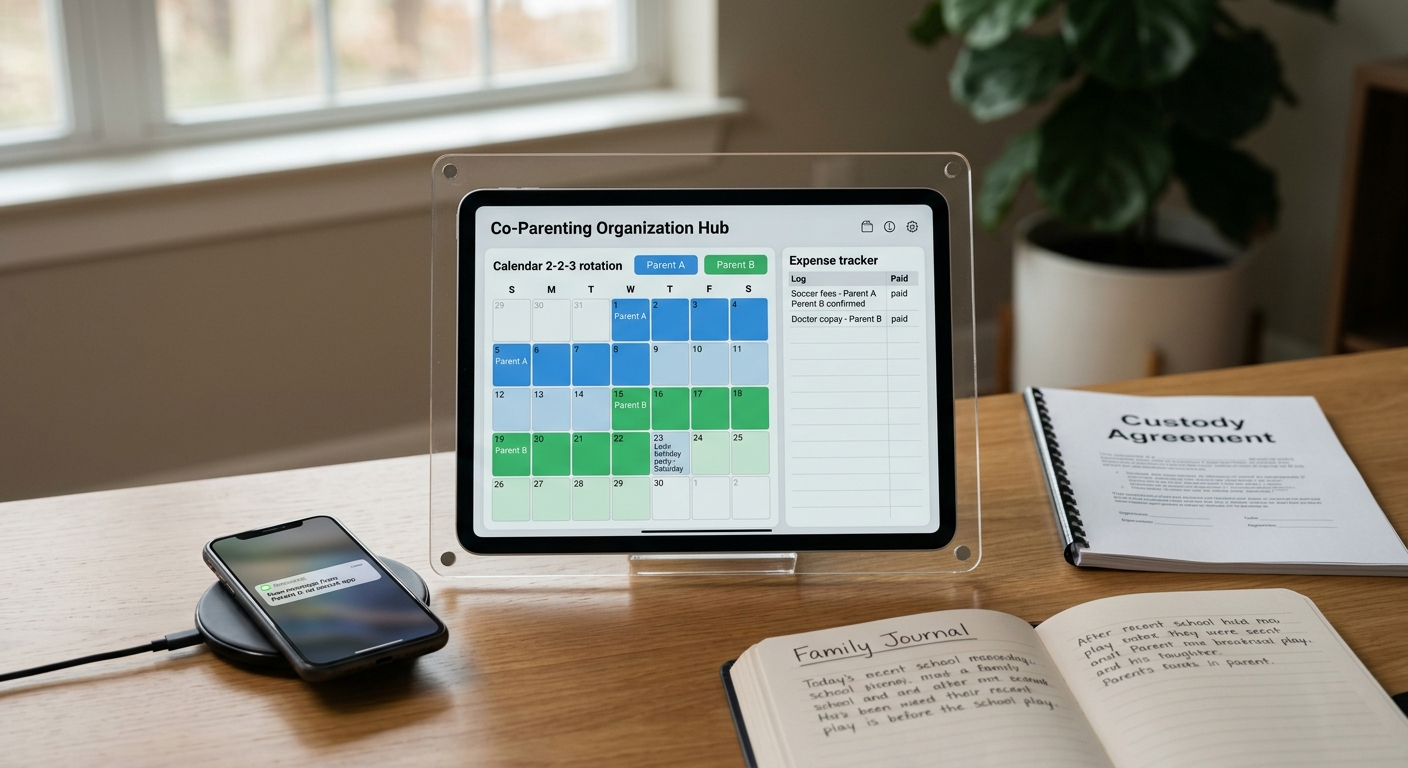
The best apps in this category do more than offer a shared calendar. They help parents keep conversations organized, track reimbursements, store important records, and, in some cases, create documentation that can be shared with mediators, attorneys, or the court if needed. At the same time, not every family needs the same level of oversight. Some households need legal-grade accountability, while others simply need a cleaner way to manage logistics.
With that in mind, the four apps below stand out in 2026 for different reasons. Some are built for high-conflict situations where documentation matters most, while others are better suited to cooperative households that mainly need scheduling and organization tools.
OS Availability: Android
OurFamilyWizard remains one of the best-known names in co-parenting technology, largely because it was designed with accountability in mind from the start. It is widely used in higher-conflict situations and is often recommended when parents need a clear record of communication, expenses, and schedule changes.
One of its most distinctive features is ToneMeter, which reviews messages before they are sent and flags language that may come across as aggressive, hostile, or inflammatory. That kind of prompt will not solve deeper communication issues on its own, but it can help reduce reactive exchanges and encourage more neutral, child-focused messaging.
The app also includes strong documentation tools. Messages are timestamped, expense requests can be logged with receipts, and records are stored in a way that is designed to preserve accountability. For families already working with mediators, custody coordinators, or attorneys, that structure can be especially valuable.
Strong recordkeeping for messages, schedules, and reimbursements
ToneMeter can help reduce emotionally charged communication
Professional access options are useful in cases involving attorneys or mediators
Pricing is higher than many competing apps
The interface is functional, but it feels more utilitarian than modern consumer apps
OS Availability: Android
TalkingParents is another app built around documentation and transparency, making it a strong option for families who need a clear communication record. Its focus is less on family organization in the broad sense and more on preserving interactions in a way that can be reviewed later if disputes arise.
One of its defining features is Accountable Calling, which allows parents to make phone or video calls through the platform without sharing personal contact details. Those calls can be logged within the system, alongside written messages and other communication records. For households where verbal agreements often lead to disagreements later, that added layer of documentation can be important.
The platform has also introduced writing and sentiment tools designed to support more neutral communication. That will not be the main reason every parent chooses it, but it does reflect the app’s broader goal: reducing ambiguity and keeping co-parenting conversations focused on practical matters.
Strong communication logging across messages and calls
Useful for parents who need detailed documentation
Writing support tools can help keep exchanges more measured
Mobile access now requires a paid subscription
Costs can add up if both parents need higher-tier plans
OS Availability: Android
Cozi was not created specifically for separated or divorced parents, but it can still work well in the right co-parenting situation. For households that communicate reasonably well and mainly need help keeping schedules aligned, Cozi offers a simpler and more approachable alternative to apps built around legal documentation.
Its biggest strength is everyday organization. Shared calendars, lists, reminders, and household planning tools make it easy for both homes to stay current on school events, sports practices, medical appointments, and day-to-day tasks. The color-coded calendar is especially useful for families with multiple children, since it gives each person a clear visual place in the schedule.
What Cozi does not provide is legal structure. It is not designed to create court-friendly records or manage sensitive disputes, so it is best suited to lower-conflict arrangements where the goal is coordination rather than documentation.
Easy to use for shared schedules, reminders, and household organization
Works well for cooperative co-parenting arrangements
More affordable and approachable than legal-focused alternatives
Does not offer court-oriented documentation features
Expense tracking is basic compared with dedicated co-parenting platforms
The best co-parenting app depends less on feature count and more on the relationship between the two households.
For high-conflict situations—or any arrangement involving legal oversight, ongoing disputes, or a need for formal documentation—OurFamilyWizard is still the strongest overall option. Its communication records, expense tools, and ToneMeter feature make it well suited to parents who need a structured platform with accountability built in.
For parents who need strong documentation but want to focus specifically on preserving calls and written communication, TalkingParents is also a compelling choice.
At the other end of the spectrum, Cozi Family Organizer makes more sense for low-conflict households that simply need a reliable shared calendar and a straightforward way to keep everyone on the same page. It lacks the legal and forensic tools of dedicated co-parenting apps, but for cooperative families, that may be a benefit rather than a drawback.
AppClose sits somewhere in the middle. It is more structured than a general family organizer, more affordable than many legal-focused apps, and especially useful when only one parent is willing to actively maintain records.
In short, there is no single best co-parenting app for every family. The right choice depends on whether the priority is legal documentation, calmer communication, lower cost, or simple day-to-day organization.