Most travelers can find famous landmarks without much effort. Finding a giant prairie dog statue, a UFO-themed museum, a fiberglass dinosaur, or a mysterious roadside art installation is a completely different challenge.
The most memorable road-trip experiences often happen far from national parks and major tourist destinations. Unfortunately, many of these quirky attractions receive little marketing, limited signage, and almost no mainstream travel coverage.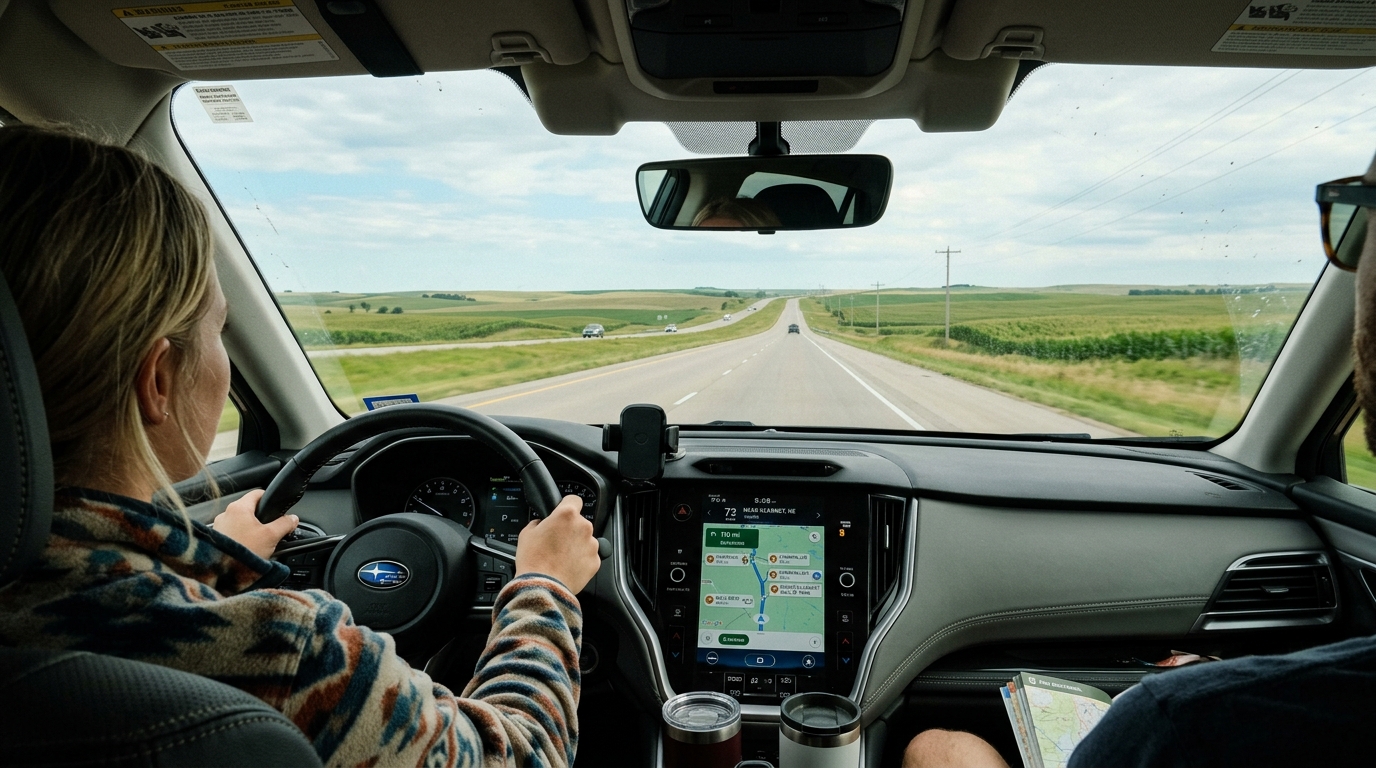
To identify the best tools for discovering and documenting unusual roadside attractions across the United States, several travel and exploration apps were tested using four key criteria:
Ability to uncover unusual and offbeat attractions
Route-based discovery features
Tools for saving, tracking, and documenting visits
Overall value for road-trippers
The following apps consistently delivered the most interesting discoveries.
If the goal is finding giant statues, bizarre museums, unusual monuments, and classic roadside oddities, Roadside America remains one of the most specialized apps available.
The app is built around a massive database of quirky attractions throughout the United States and Canada. During testing, it repeatedly surfaced attractions that never appeared in mainstream travel apps. Its route-planning feature is particularly valuable because it identifies unusual attractions near an active driving route rather than requiring users to search city by city.
The editorial descriptions add useful context and often explain the stories behind the attractions.
One of the largest databases of roadside oddities
Strong route-based discovery tools
Detailed attraction descriptions
Excellent for classic Americana road trips
iOS only
Interface feels dated compared to newer apps
Requires purchase
One-time paid app, with regional content available through additional purchases.
Roadtrippers remains one of the most complete road-trip planning apps available.
Unlike Roadside America, which focuses almost entirely on unusual attractions, Roadtrippers blends route planning with discovery. Travelers can find roadside landmarks, scenic stops, museums, historic sites, quirky attractions, and local points of interest along an entire route.
During testing, its route overlay feature consistently revealed worthwhile detours that would otherwise have been missed.
Excellent route-planning capabilities
Large attraction database
Available on both major platforms
Strong trip organization tools
Less specialized than Roadside America
Some advanced features require a subscription
Can surface mainstream attractions alongside quirky ones
Free download with optional subscription plans.
Atlas Obscura excels at uncovering unusual places with fascinating stories.
Rather than focusing solely on roadside attractions, the platform highlights hidden museums, unusual architecture, forgotten historical sites, strange natural formations, and eccentric cultural landmarks. During testing, it consistently provided deeper context and more interesting narratives than most competitors.
For travelers who enjoy learning the story behind an attraction, Atlas Obscura is difficult to beat.
Exceptional editorial quality
Large collection of unusual destinations
Strong historical and cultural context
Free to use
Less route-focused than competitors
Some rural regions have lighter coverage
Not specifically designed for documenting visits
Free.
FotoSpot approaches roadside exploration from a visual perspective.
The app highlights photogenic attractions, hidden landmarks, murals, roadside art, historic sites, and unusual destinations throughout the United States. During testing, it often surfaced lesser-known attractions that larger travel platforms overlooked.
Its curated approach makes it particularly effective for travelers interested in documenting discoveries through photography.
Strong collection of unique destinations
Excellent for photography-focused travelers
Curated recommendations
No recurring subscription
iOS only
Smaller community than major travel apps
Limited trip-planning tools
One-time paid app.
At first glance, iNaturalist may seem like an unusual inclusion.
The app is primarily designed for documenting plants, animals, and natural observations. However, during testing it proved surprisingly useful for travelers who enjoy recording discoveries and building a digital record of places visited.
While it does not specialize in roadside attractions, its observation and documentation features encourage exploration and provide a structured way to catalog unique finds along a journey.
Excellent documentation tools
Large community of contributors
Free to use
Strong location-tracking capabilities
Not designed specifically for roadside attractions
Focused primarily on nature observations
Limited attraction discovery features
Free.
For travelers whose primary goal is finding unusual roadside attractions, Roadside America remains the strongest dedicated option.
Its singular focus on quirky landmarks, giant sculptures, roadside oddities, and offbeat Americana makes it one of the few apps built specifically for this type of exploration.
However, no single app does everything well.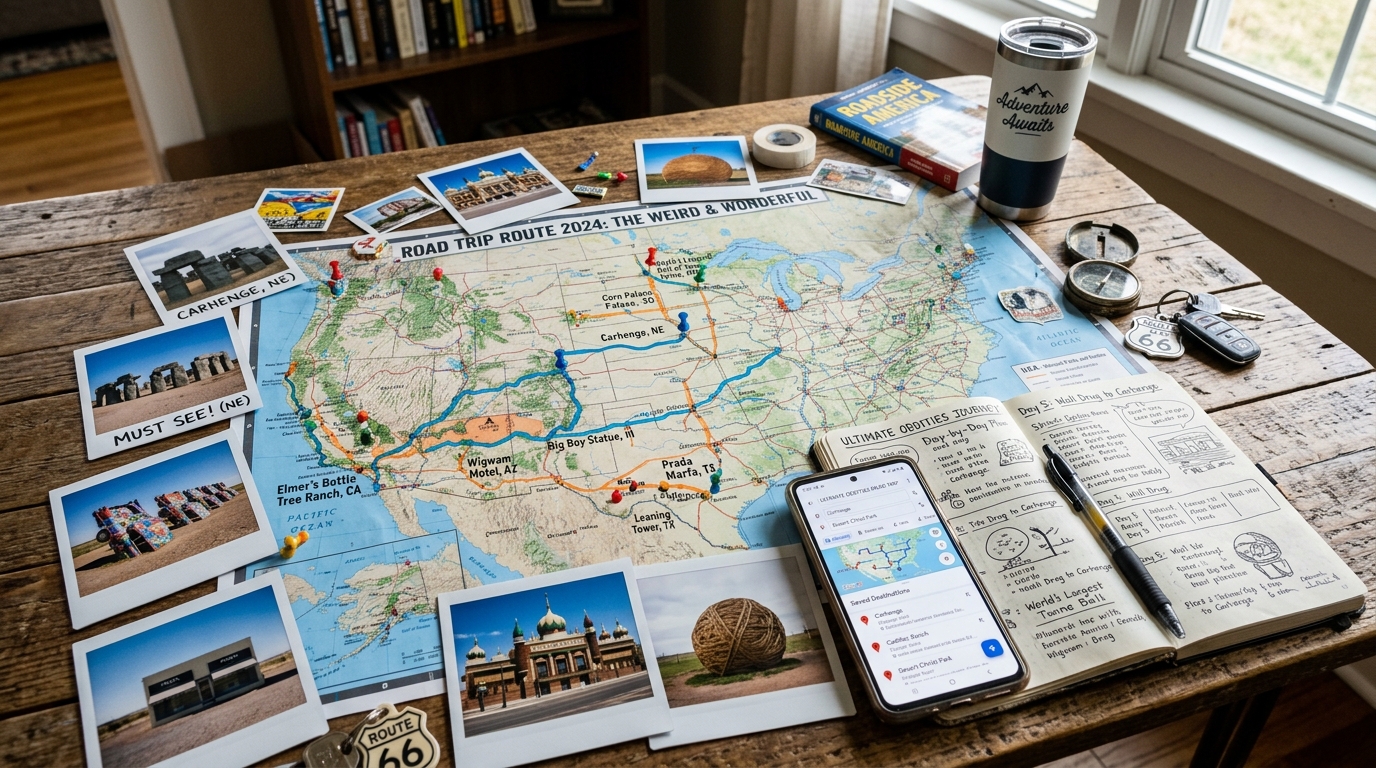
The most effective combination during testing was:
Roadside America for discovering classic roadside attractions
Roadtrippers for route planning and attraction discovery
Atlas Obscura for historical context and unusual destinations
Together, these apps create an exceptionally powerful toolkit for travelers who believe the best road-trip stories are usually found somewhere between the interstate exits and the destination itself.
For anyone seeking giant balls of twine, mysterious desert art installations, unusual museums, oversized animal statues, and other wonderfully strange landmarks, that combination consistently produced the most memorable discoveries on the road.